
A good dress shirt starts with clear measurements, not guesses. This shirt measurement guide shows the main dress shirt dimensions, how to measure them, and how to use those numbers with a men’s sizing chart or a shirt size calculator. Once you know the basics, dress shirt sizing feels much less confusing.
Quick answer: Here is how to measure for a dress shirt: measure your neck at the collar line, your sleeve from the center back of the neck to the wrist with a slightly bent arm, and your chest around its fullest point. Record all three in inches, then compare them with the Anton Alexander sizing guide. Measure shoulders, waist and shirt length to refine the fit. This article explains each step and the difference between body and finished-shirt measurements.
What measurements do you need for a dress shirt?
The main mens dress shirt measurements are neck, sleeve length, chest, shoulder width, waist, shirt length, and sometimes wrist or upper-arm size. These numbers show how a shirt fits when buttoned, tucked, or worn under a jacket. If you only know your usual S, M, or L, you may still end up with a shirt that pulls at the chest, gaps at the waist, or shows too much wrist when you reach.
Most dress shirt sizing starts with two numbers: neck size and sleeve length. A shirt label may list neck first and sleeve second. Casual shirts may use S, M, and L sizes, but the fit still depends on the same body points.
Key men’s measurements
Neck size
Neck size tells you if the collar feels good when buttoned. Wrap a soft measuring tape around the base of your neck, where the collar sits. Leave one finger under the tape so the collar has a little room.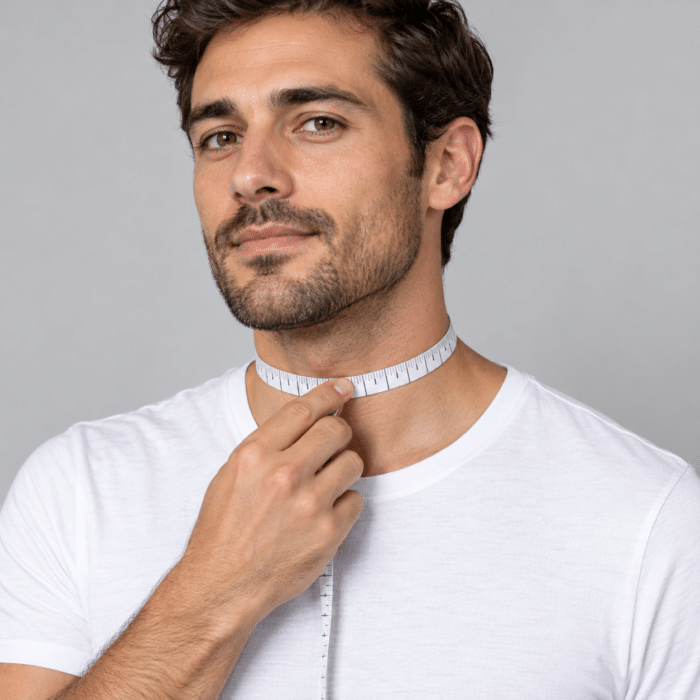 Measure at the base of the neck, where the shirt collar sits, leaving room for one finger.
A collar that is too tight feels bad and can bunch near the top button. A collar that is too loose can look sloppy with a tie.
Sleeve length
Sleeve length is a key dress shirt dimension because it affects both comfort and style. Measure from the center back of the neck, across the shoulder, down the arm, and to the wrist bone. Keep the arm slightly bent.
This gives the sleeve room to move. If you wear jackets, the cuff should show a little when your arms rest at your sides, but it should not cover your hand.
Chest measurement
Measure around the fullest part of your chest, under the arms and across the shoulder blades. Keep the tape level and snug, not tight. This helps stop pulling at the buttons and tightness in the upper back.
If your chest size falls between sizes, think about the fit you want. A slim fit works well for a narrower build, while a classic fit gives more room in the torso.
Waist measurement
Measure around the middle of your body where the shirt buttons at the stomach. This matters most for fitted dress shirts because the waist helps decide whether the shirt looks neat or feels tight when seated.
Do not pull in your stomach while measuring. A dress shirt should fit your real posture and daily movement.
Shoulder width
Measure from one shoulder point to the other across the upper back. A well-fitting shirt has seams near the edge of your shoulders, not far down the arm or too close to the neck.
Bad shoulder fit can make the right neck and sleeve size feel wrong. Too wide looks big; too narrow limits movement and can stress the fabric.
Shirt length
Shirt length runs from the base of the collar at the back down to the hem. A shirt meant to be tucked in should usually be long enough to stay tucked when you sit, bend, or reach. Untucked shirts are often shorter and cut differently.
For formal wear, choose a length that stays in the trousers. For casual wear, check that the hem sits in a balanced place and does not throw off your shape.
How to measure for a dress shirt accurately
A shirt measurement guide only works if you measure the same way each time. Use a soft tape, stand normally, and measure over a thin undershirt or close-fitting clothes. If you can, ask someone to help, especially with sleeve length and shoulders.
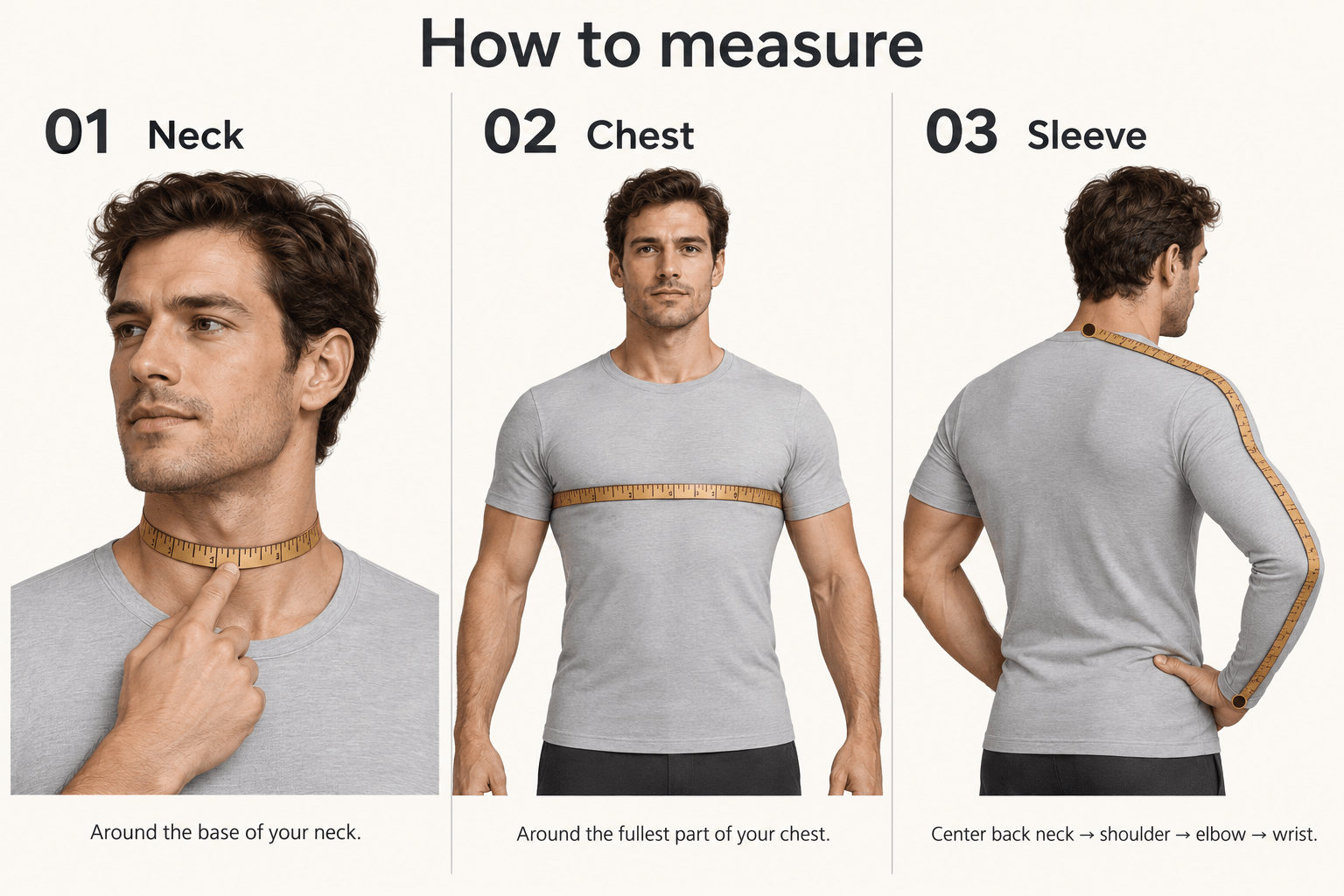
Follow these steps:
- Measure your neck first. Place the tape at the collar line and leave a little room.
- Measure sleeve length with a bent arm. Start at the center back of the neck and end at the wrist bone.
- Measure around the chest. Keep the tape level under the arms at the fullest part.
- Measure the waist naturally. Use your normal posture and do not pull the tape too tight.
- Check shoulder width. Measure across the back from shoulder point to shoulder point.
- Record shirt length if needed. This helps when buying shirts for tucking or untucked wear.
Measure twice for the best result. If the two numbers differ, measure a third time and use the steadiest result.
Body measurements versus garment measurements
Body measurements show your size. Garment measurements show the shirt itself. This matters because a shirt should be a little larger than your body so you can move, sit, reach, and breathe.
| What you measure | Example | What it means |
|---|---|---|
| Your chest | 40 in around your body | A body measurement, taken with the tape level under your arms. |
| A favorite shirt, laid flat | 21 in across the chest | Double the flat width: about 42 in around the finished shirt. |
| Difference | About 2 in | Room for movement in this example; ease varies by cut and fabric. |
That extra room is called ease. A very slim shirt has less ease and follows the body closely. A classic or regular fit has more ease and feels roomier. When you compare dress shirt dimensions online, check whether the numbers show body size or the finished shirt.
| Area | Measure your body | Measure a favorite shirt |
|---|---|---|
| Chest | Tape all the way around the fullest part of your chest. | Button the shirt, lay it flat, measure across under the armholes, then double that flat width for an approximate shirt circumference. |
| Neck | Tape around the base of your neck, leaving room for one finger. | Open and flatten the collar; measure from the center of the button to the far end of the buttonhole. |
| Sleeve | Center back of the neck, over the shoulder and bent elbow, to the wrist bone. | Follow the same path on a shirt that fits you, starting at the center of the back collar. |
Example: A 21-inch flat chest width on a buttoned shirt is about 42 inches around the shirt. It does not mean your body chest measures 42 inches: the difference provides room to move. When contacting us about sizing, label each number as a body or shirt measurement.
If a listing gives garment measurements, compare them with a shirt you already own and like. Lay that shirt flat, button it, smooth it without stretching, and measure the chest, shoulders, sleeves, and length. That can be more accurate than using body numbers alone.
How should a dress shirt fit?
A dress shirt should feel comfortable when buttoned, allow natural movement, and look clean under a jacket or on its own. The collar should close without pinching, the shoulder seams should line up with your shoulders, and the buttons should lie flat without pulling.
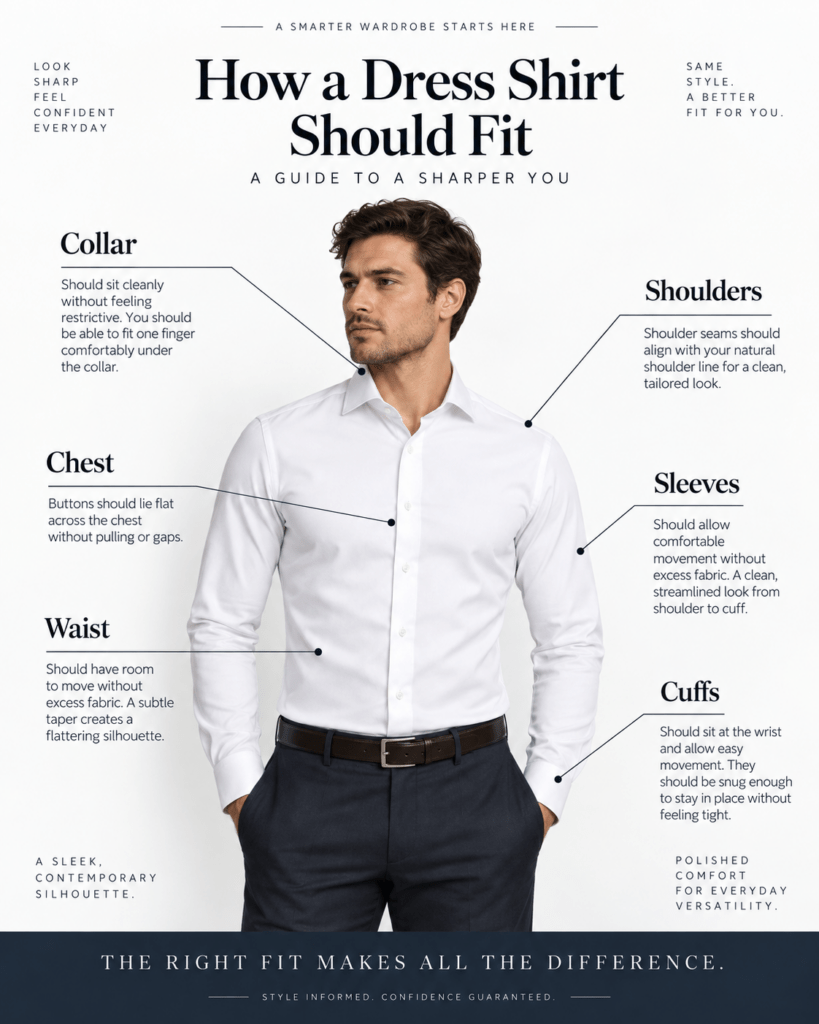
Use this quick fit checklist when trying on a shirt:
- Collar: You can button it and fit one finger inside.
- Shoulders: Seams sit near the edge of your shoulders.
- Chest: Buttons stay flat with no pulling.
- Sleeves: Cuffs reach the wrist bone when arms are relaxed.
- Cuffs: They are snug enough not to slide over the whole hand.
- Waist: Fabric follows the torso without clinging tightly.
- Length: The hem stays tucked during normal movement if the shirt is made for formal wear.
Small fit issues can sometimes be tailored, especially at the sides or sleeve length. But collar size and shoulder fit are harder to fix, so make those a priority.
Using a men’s sizing chart or shirt size calculator
A men’s sizing chart helps turn measurements into a brand’s sizes, while a shirt size calculator can suggest a size from your body numbers. These tools help, but they are not universal because brands cut shirts in different ways.
When using either tool, enter exact measurements instead of your usual size. Then read the fit notes carefully. Words like slim, tailored, athletic, regular, and classic can show big differences in chest, waist, and arm room.
Before you order, check these details:
- Whether the chart uses inches, centimeters, or both
- Whether sizes are based on body measurements or garment measurements
- Whether sleeve lengths are fixed or offered in ranges
- Whether the shirt is made to be tucked or untucked
- Whether the fabric has stretch, which may add comfort but does not replace correct sizing
If you are between sizes, choose the hardest area to alter. For many men, that means picking the best collar and shoulder fit, then tailoring the waist if needed.
How to use these measurements for Anton Alexander shirts
Anton Alexander offers Modern Fit and Fitted in sizes XS–XXL. Use your neck, sleeve and chest measurements to find a starting size in our Anton Alexander size chart. The chart lists these three measurements in inches, so check each one rather than assuming your usual letter size will fit. For a size-first reference, see the separate dress shirt size chart; this article focuses on taking and comparing measurements.
| Size | Neck | Sleeve | Chest |
|---|---|---|---|
| XS | 13–13.5 | 31–32.5 | 33–35.5 |
| S | 14–14.5 | 32–33.5 | 36–38.5 |
| M | 15–15.5 | 33–34.5 | 39–41.5 |
| L | 16–16.5 | 34–35.5 | 42–44.5 |
| XL | 17–17.5 | 35–36.5 | 45–47.5 |
| XXL | 18–18.5 | 36–37.5 | 48–50.5 |
How to read it: A 15.5-inch neck, 34-inch sleeve and 40-inch chest each point to Medium. If one of your three measurements points to a different row, ask us which base size to use before ordering. Fitted uses the same neck and sleeve ranges as Modern Fit, but has a closer cut through the body.
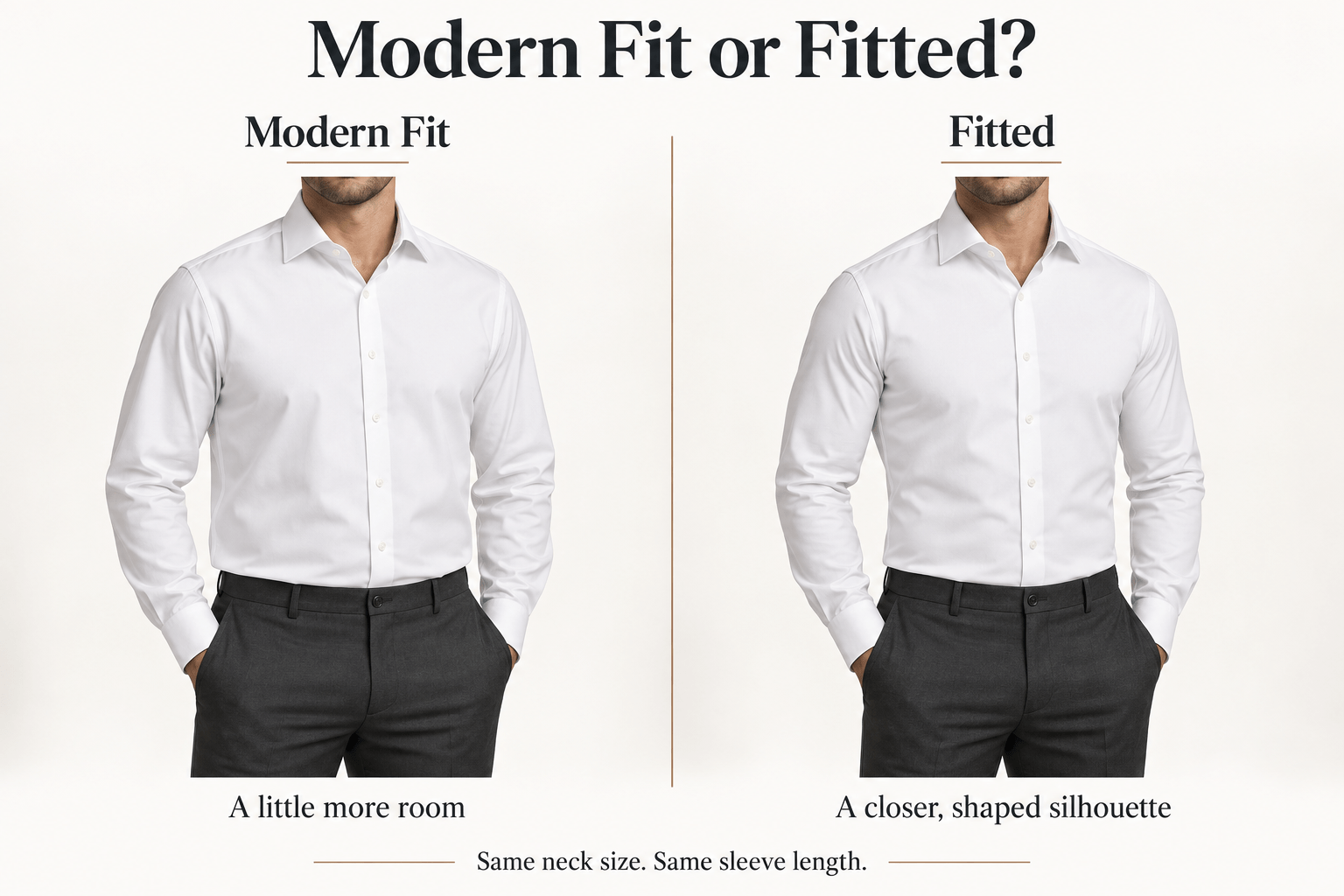
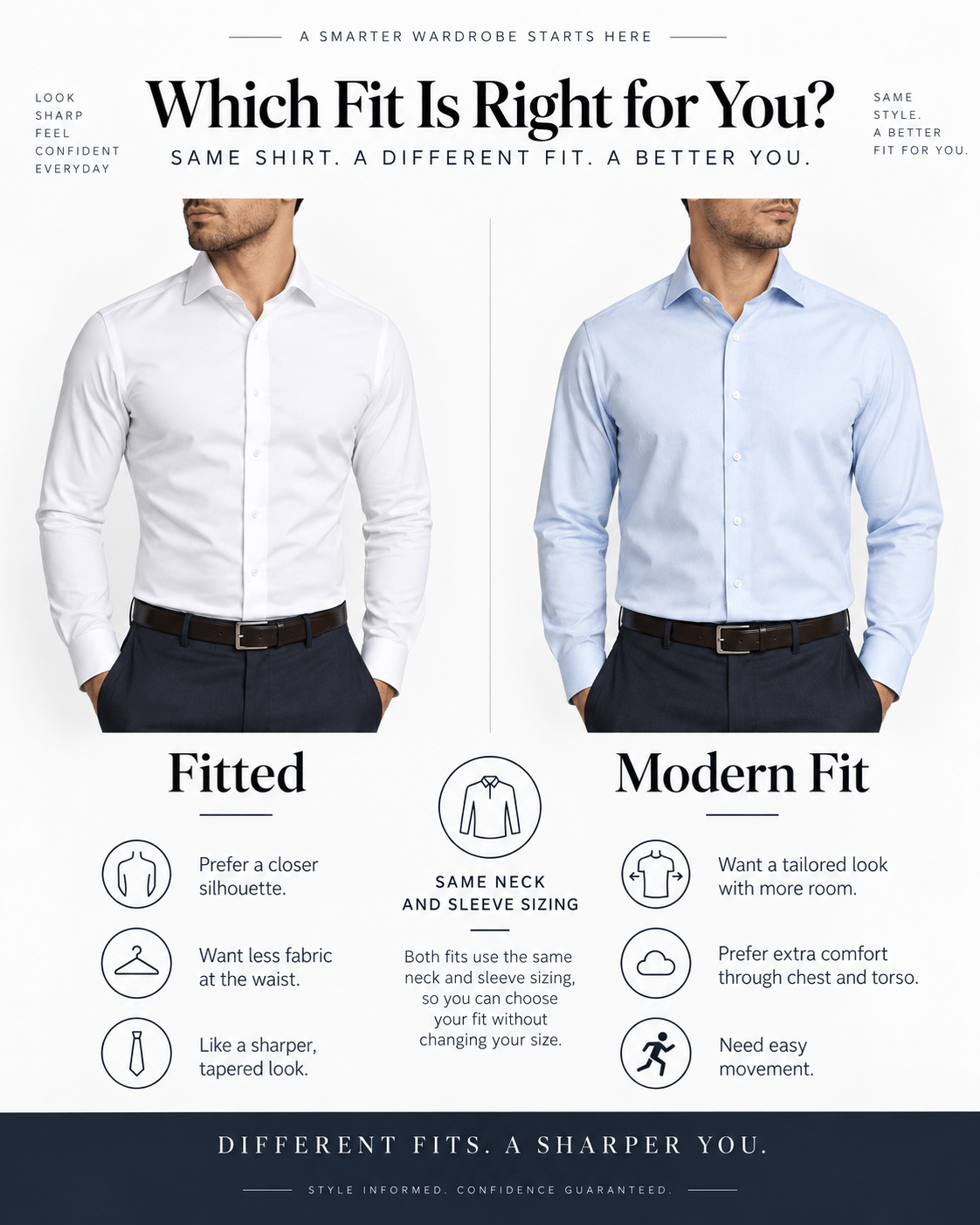
Choose your fit: Modern Fit is tailored with more room in the chest, waist and arms. Fitted follows the torso more closely. In the same labeled size, Fitted is about 1″ closer in the chest and 2½″ closer in the waist; neck and sleeve length do not change. These differences describe the cut of the shirt, not numbers to subtract from your body measurements. See our fit comparison for more detail.
If your neck, sleeve and chest point to different sizes, contact us before ordering. You can request a custom sizing adjustment at no additional charge and include the details in your checkout notes. Tell us whether your numbers came from your body or from a favorite shirt, since those measurements are not interchangeable.
Common dress shirt sizing mistakes
Many fit problems come from guessing instead of measuring. A man who wears a medium in one brand may need a large, a slim fit, or a specific neck-and-sleeve size in another. The label matters less than how the shirt fits your body.
Avoid these common mistakes:
- Measuring over bulky clothing, which adds false size
- Pulling the tape too tight around the chest or waist
- Ignoring sleeve length because the collar fits
- Choosing a shirt based only on height or weight
- Buying a slim fit when the shoulders or chest need more room
- Assuming all brands use the same men’s sizing chart
- Forgetting that shrinkage may matter for some fabrics and care routines
The goal is not one perfect universal size. The goal is to know your measurements well enough to choose better across brands, fits, and occasions.
A practical approach to better shirt buying
Once you know your core dress shirt measurements, save them with the date so you can check them again when your fit needs change. For the next steps, our custom dress shirt guide explains how to choose fabrics, cuffs and contrast details, then confirm your order.
If you already own a shirt that fits well, use it as a reference. Compare its garment measurements with new options and note which brands or fits work best for your body. Over time, your personal dress shirt sizing system becomes more reliable than any single label.
A good shirt should help you feel neat, not distracted. With accurate men’s measurements, a clear grasp of dress shirt dimensions, and smart use of sizing tools, you can choose shirts that look sharper, feel better, and match the way you move through the day.
Dress shirt measurements: common questions
Which dress shirt measurements should I focus on first?
Start with neck size, sleeve length, and shoulder width. These areas affect comfort the most and are harder to fix with tailoring. Waist and side fit can often be changed more easily, but a tight collar or bad shoulder seams can throw off the whole shirt.
Why measure a shirt I already own?
A shirt that fits well gives you useful garment measurements, not just body measurements. Because shirts need extra room, comparing a new shirt to a proven favorite can help you judge chest, shoulder, sleeve, and length more accurately when you shop online.
What if my measurements fall between sizes?
Pick the size that fits the hardest-to-alter areas best, usually the collar and shoulders. If the waist is a little roomy, it may be tailored later. Also check the brand’s fit notes, because slim, tailored, athletic, regular, and classic fits can vary a lot even when the listed size looks similar.
How can I tell whether a dress shirt is the right length?
A formal dress shirt should be long enough to stay tucked when you sit, bend, or reach. If the shirt is meant to be worn untucked, it is usually shorter and cut differently, so the hem should sit in a balanced place without making your shape look off.
How often should I recheck my dress shirt measurements?
Recheck them whenever your weight, posture, training routine, or body shape changes. It is also smart to update them from time to time even if nothing obvious has changed. Saving your measurements with the date makes it easier to track what still fits and shop with more confidence across brands.