
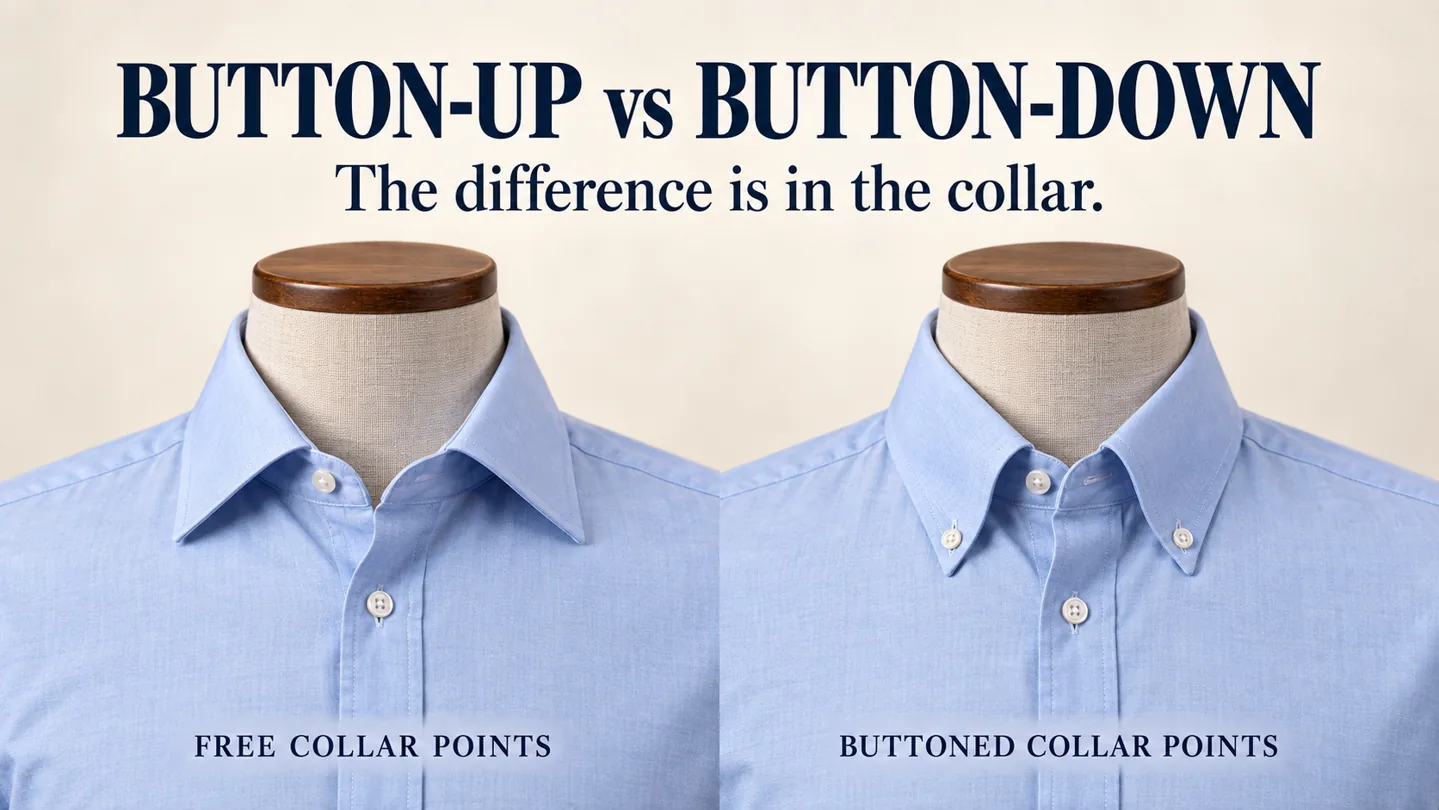
The difference between a button-up and a button-down shirt is what the buttons fasten. A button-up shirt opens along a full buttoned front. A button-down collar has small buttons that secure its points to the shirt. A shirt can have both features: a full button front and a button-down collar.
If you are comparing two shirts online, look at the collar tips first. The buttons running down the chest do not distinguish a button-down collar from other collars. Neither do sleeve length, slim fit or the color of the fabric.
Button-up vs button-down: the quick comparison
| Feature | Button-up shirt | Button-down collar shirt |
|---|---|---|
| What the term describes | A full-length front opening fastened with buttons | Collar points secured to the shirt with buttons |
| Collar options | Can include point, spread, button-down and other collars | Button-down, including designs with hidden fastenings |
| Fit | Can be slim, regular or relaxed | Can also be slim, regular or relaxed |
| Fabric | Many options, including Oxford, poplin and linen | Many options; Oxford cloth is familiar but not required |
| Typical styling | Depends on collar, fabric, pattern and construction | Often casual or business casual; can work with a tie |
Remember it this way: button up the front; button down the collar points. Shops and everyday conversation sometimes use “button-down” for any button-front shirt. Product photographs and collar specifications are more dependable than the name alone.
What is a button-up shirt?
A button-up shirt has a front opening that fastens with buttons from the neckline toward the hem. The name describes how you put it on and close it. It does not promise a particular level of formality.
A crisp white dress shirt, a short-sleeve printed vacation shirt and a rugged flannel can all be button-ups. A shirt with a button-down collar can be a button-up too. By contrast, a polo with only a short neck placket does not have a full button-up front, even if its collar points happen to fasten down.
Shopping for everyday versatility? Our long sleeve button-up shirt guide covers fit and outfit choices beyond the collar.
What is a button-down shirt?
In precise shirt terminology, a button-down shirt has a collar with points that attach to the shirt using small buttons. These fastenings help keep the tips in position. They are separate from the top neck button and the buttons on the front placket. For another visual reference, Eton’s collar guide shows button-down and concealed button-under collars alongside other collar shapes.
On a traditional visible button-down, you can see a small button at each collar tip. A hidden button-down uses concealed fastenings underneath, creating a cleaner appearance from the front. Check the product description if the fastening is not visible.
Identify your shirt in ten seconds
- Check the front: Does the shirt open all the way with buttons? That is the button-up feature.
- Check both collar points: Do they fasten to the shirt? That is the button-down feature.
- Read the specification: Hidden collar buttons may not appear in a straight-on product photo.
Undoing the collar-tip buttons does not change the type of collar. A button-down remains a button-down when its fastenings are open.
Is a button-down the same as an Oxford shirt?
No. Oxford describes a fabric weave; button-down describes a collar fastening. The familiar Oxford cloth button-down combines the two, which is why the terms are often confused.
An Oxford shirt can have a different collar, and a button-down collar can be made from fabric other than Oxford. If you want that textured Oxford feel, check the fabric description separately from the collar choice. See our Oxford shirt guide for a closer comparison.
Which shirt should you wear?
Start with the occasion and the whole outfit. A collar gives you useful information, but it cannot decide the dress code by itself.
For an office or business-casual outfit
A light blue button-down collar shirt with chinos and loafers is a practical starting point in a relaxed office. A smooth cotton shirt with a point or spread collar and tailored trousers creates a more formal impression. Either can work under a jacket when the fit and workplace expectations line up.
For a suit, interview or dressier wedding
A white or pale blue dress shirt with a point or moderate spread collar is a straightforward choice for a conservative suit-and-tie outfit. A button-down collar can also work with tailoring in settings that welcome an American Ivy-style look. Match the invitation or workplace rather than assuming every wedding or interview has the same rules.
For black tie, choose a shirt appropriate to a tuxedo and the event’s dress code. Simply buying a shirt labeled “button-up” is not enough.
For weekends and evenings out
A soft Oxford button-down with dark denim or chinos gives a relaxed, tidy appearance. A patterned or contrast-cuff button-up adds more visual interest for dinner or an evening event. Keep the trousers simple if the shirt is the focal point.
For example, the Anton Alexander black and gold dress shirt has a button-up front with signature paired buttons. Those double buttons are a design detail on the placket; they do not make the collar a button-down.

Can you wear a tie with a button-down collar?
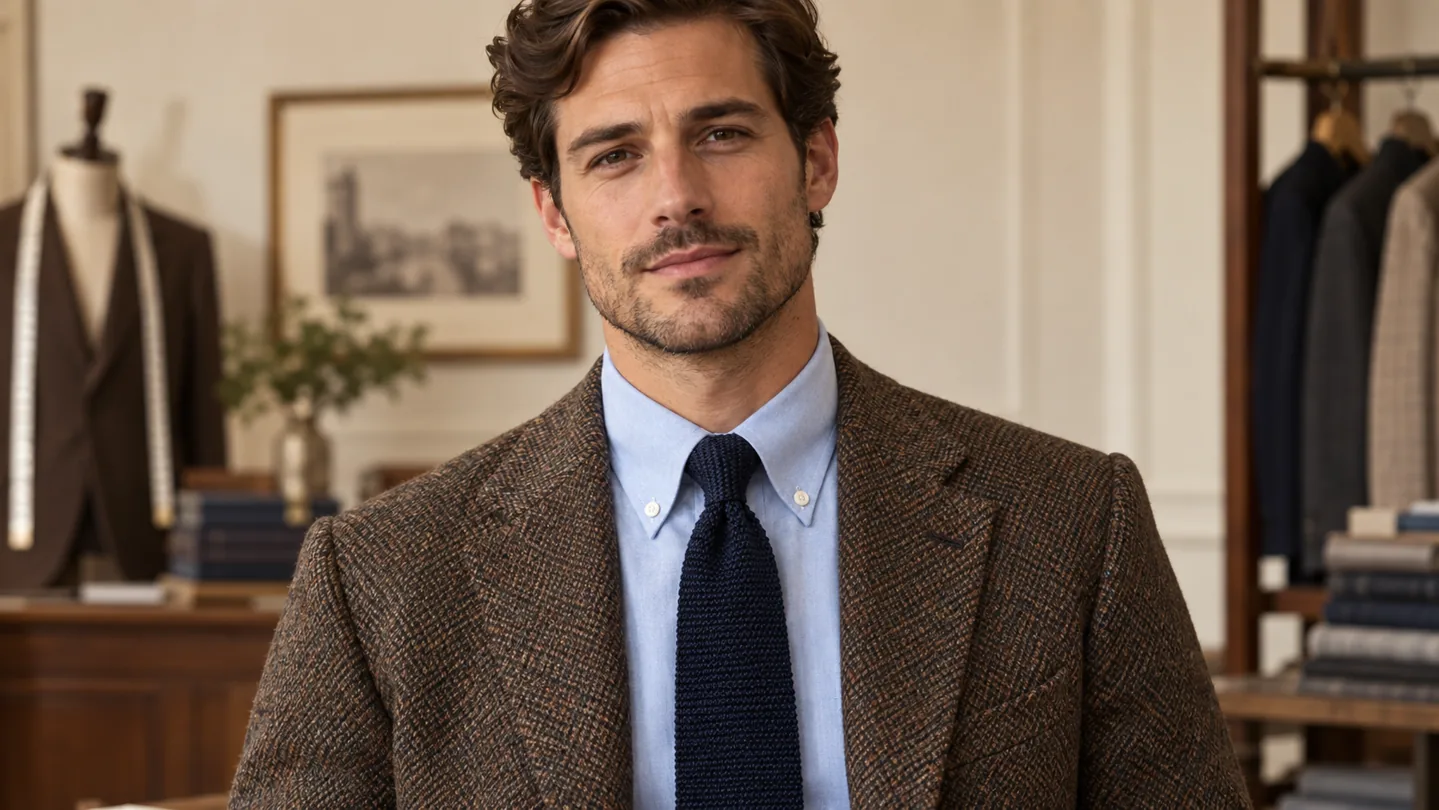
Yes. A button-down collar can look natural with a tie, particularly with an Oxford shirt, sport coat and textured neckwear. It is not automatically a “no-tie” collar.
Choose a knot that fits the space between the collar points without forcing them outward. Fasten the collar-tip buttons and check that the collar rolls comfortably around the tie. A knit tie and a softly structured jacket make an approachable combination. For a more formal, smooth suit outfit, a point or spread collar is often the easier starting point.
A very wide collar does not require the largest possible tie knot. Collar height, point length, tie thickness and your proportions matter too. Our spread collar guide explains what to look for.
Three things the collar does not tell you
1. Whether the shirt will fit
Button-down does not mean loose, and button-up does not mean slim. Compare actual neck, chest, waist and sleeve measurements. Button the shirt, sit down and reach forward: the front should not pull into gaps, and your shoulders should move comfortably. Use our dress shirt fit guide before choosing a cut. For our two cuts, compare Fitted and Modern Fit dress shirts using the same labeled size.
2. Whether it is easy to care for
Wrinkle resistance, wash temperature and ironing needs depend on the fabric, finishing and care label. Collar-tip buttons do not make a shirt non-iron. Follow the maker’s washing instructions and avoid pressing directly over buttons.
3. Whether it should be tucked in
Look at the hem length and the outfit. A long, curved dress-shirt hem is usually intended to tuck in. A shorter casual hem may work untucked. The collar label alone cannot answer this question.
How to shop without buying the wrong shirt
- Want collar tips that stay fastened down? Look specifically for a button-down collar, then check whether its buttons are visible or hidden.
- Want a shirt for a conservative suit outfit? Compare point and spread collars, smooth fabrics and the event’s dress expectations.
- Want a particular body shape? Check measurements and cut; do not infer them from the collar name.
- Want a distinctive design? Compare prints, contrast fabrics and buttons independently of collar fastening.
Browse our Designer Collection dress shirts for individual designs, or explore the custom dress shirt studio. If you need a particular collar construction, ask us to confirm that option before ordering. Our custom shirt buying guide explains the details worth confirming.
Button-up and button-down shirt FAQs
Are button-up and button-down shirts the same thing?
The terms overlap but describe different features. Button-up refers to the full front fastening; button-down refers to the collar points fastening to the shirt. One shirt can be both.
Which is more formal: button-up or button-down?
Compare specific shirts. A smooth dress shirt with free point or spread collar tips usually looks dressier than an Oxford button-down. But button-up is a broad category that also includes very casual shirts.
Should you button the small buttons on a button-down collar?
For the collar’s intended shape, generally yes. Fasten each point gently without pulling or stretching the fabric. Unfastening them for a relaxed look is a styling choice, not a change in shirt type.
Does a button-down shirt have to be long sleeved?
No. Short- and long-sleeve shirts can have button-down collars. Sleeve length is a separate design choice.
Is a dress shirt always a button-down?
No. Many dress shirts have point, spread or other collars without tip buttons. “Dress shirt” describes the garment’s intended use more broadly than its collar fastening.
What is a hidden button-down collar?
It secures the collar points with concealed fastenings underneath. The front can look similar to a free-point collar, so check the description or an underside photograph.
Do double buttons on the front make a shirt button-down?
No. Paired front buttons affect the placket design. A button-down collar is identified by the fastenings at its points.
Can you wear either style without a tie?
Yes, when the setting allows it. Check how the collar sits with the neck button open and whether the shirt’s fabric and pattern suit the rest of the outfit.
The detail to check before you buy
Look at the front opening and collar points separately. Then choose the fit, fabric and styling for your day. That gives you a more useful answer than relying on a store’s “button-up” or “button-down” label.