
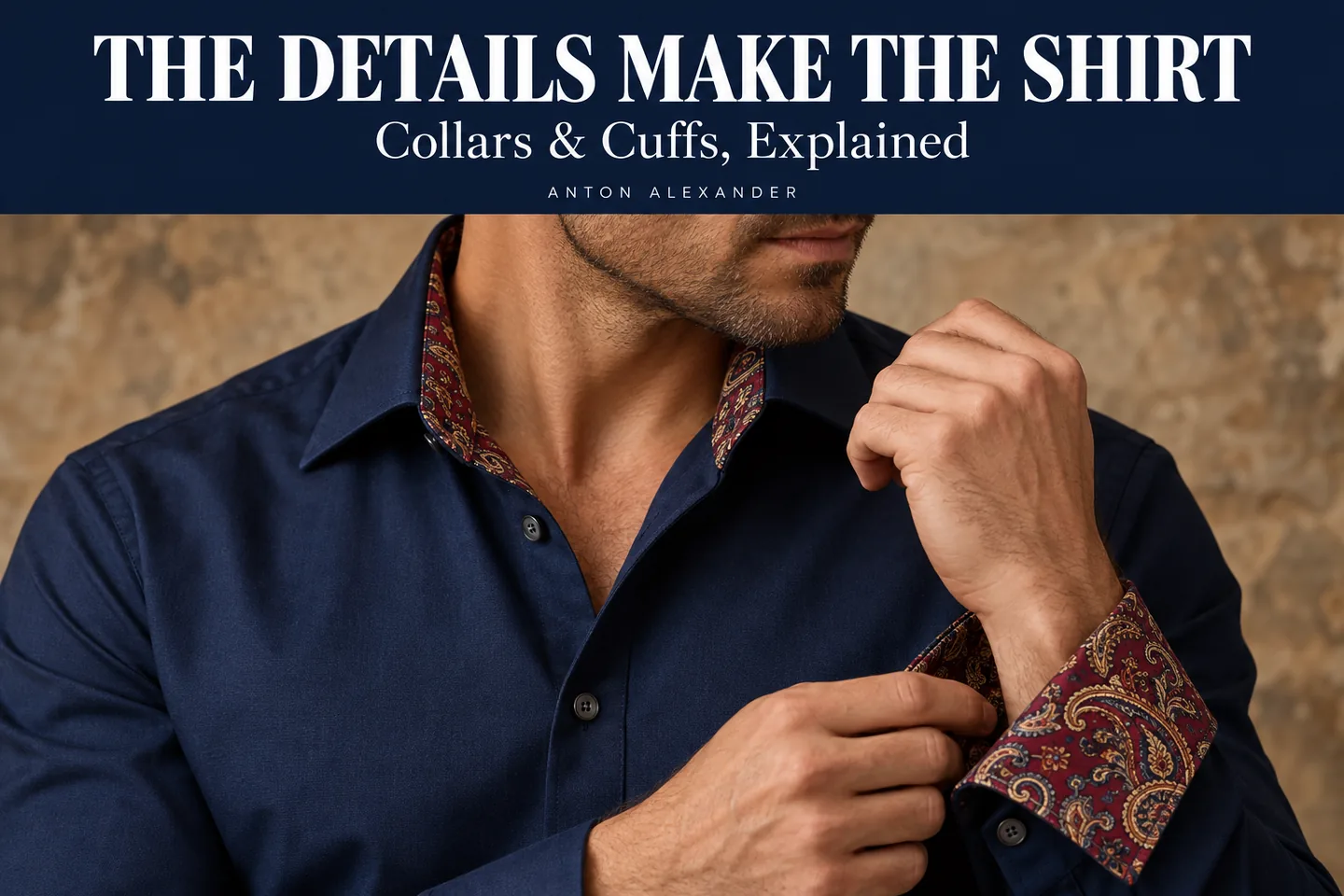
A contrast collar shirt uses a different color or pattern at the collar to distinguish it from the shirt body. Contrast cuffs bring the same idea to the wrists. To choose a combination, start with your main shirt color, decide how visible you want the accents to be, and coordinate the details with the way you actually wear the shirt.
This guide focuses on choosing collar and cuff accents. For the complete process, from fit to fabric and ordering, start with our custom dress shirt guide.
Contrast collars and inner-collar accents: what is the difference?
Contrast describes color or pattern, while spread describes collar shape. For help choosing the shape, see our spread collar vs point collar guide.
A classic contrast collar shirt has an outer collar in a different color from the body, such as a white collar on a blue shirt. Some designs also use matching contrast cuffs. The difference remains visible when the collar is buttoned.
An inner-collar accent places the contrasting fabric inside the collar. The outside can match the shirt body, while an open neckline reveals the accent. Similarly, a contrasting cuff lining can stay mostly hidden until the cuff is turned back. These are different ways to use contrast, so check the product photos instead of relying on the name alone.
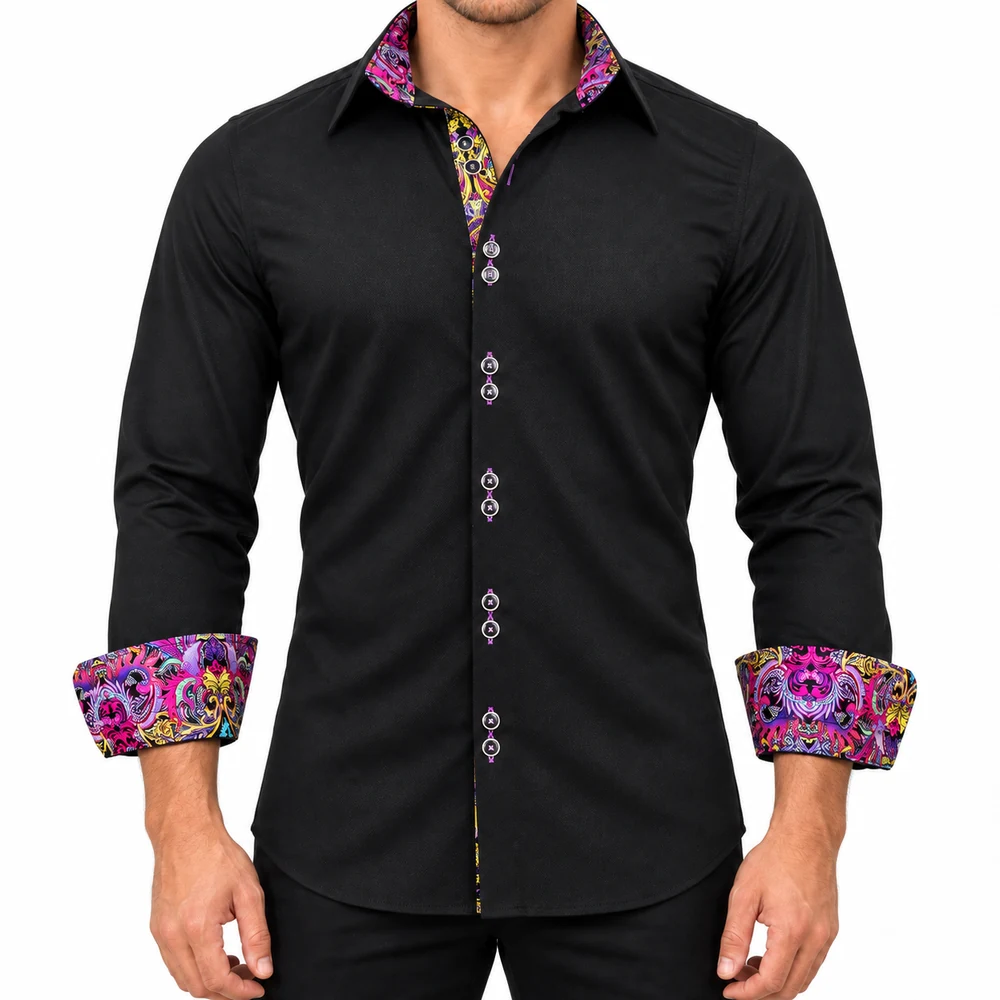
Several Anton Alexander designs use accents inside the collar, cuffs and front opening. If you are choosing a custom combination, specify where you want the accent fabric to appear and confirm the available construction options before ordering.
How to choose contrast collars and cuffs
1. Start with the shirt body
Choose the main fabric first. A solid black or white body gives a patterned accent room to stand out. If the body already has a strong pattern, a solid accent or a smaller, quieter pattern can make the combination easier to wear.
Color is only part of the decision. Consider the fabric’s feel, texture and care requirements too. Our dress shirt fabric guide explains the available fabric categories. Confirm that your preferred body and accent fabrics can be used together in your chosen design.
2. Decide how much contrast you want to show
Picture the shirt in your usual outfit. Will you button the collar and wear a tie, or leave the neckline open? Will your cuffs sit under jacket sleeves, stay buttoned at the wrist, or turn back to display the lining?
- For a restrained effect: choose similar colors or a small pattern inside the collar and cuffs.
- For a stronger accent: pair a neutral body with a bright lining, then reveal it at the neckline or wrists.
- For a visible contrast collar: ask about a different outer-collar fabric rather than assuming an inner lining will create that look.
3. Repeat one accent color
You do not need to match every color in a patterned cuff. Choose one color to repeat in an accessory, or keep the rest of the outfit neutral. With a multicolor paisley accent, plain trousers and a simple jacket allow the collar and cuffs to do most of the visual work.
4. Consider the scale of the pattern
A small motif reads differently from a large swirl when only a narrow strip of fabric is visible. Look at close-up photos and full-shirt views. For a custom order, ask how the selected pattern will look on the relatively small collar and cuff areas.
Three contrast combinations from Anton Alexander
Black with colorful paisley
The black dress shirt with colorful paisley cuffs combines a solid black body with pink, purple, yellow and turquoise accents inside the collar, cuffs and placket. Purple stitching connects the details. Wear the cuffs down for less visible pattern, or turn them back to make the paisley a focal point.
Styling idea: start with dark trousers and understated accessories. Choose one paisley color if you want an additional accent.
Black with neon pink
The black and neon pink dress shirt uses a bright solid accent against a dark body. It shows how a strong color difference can make an impact without a patterned lining.
Styling idea: use this combination for an evening outfit where bold color suits the setting. Keep other colors simple so the pink detail remains the focus.
White with black and gold
The white and gold designer dress shirt pairs white Italian cotton with black-and-gold patterned accents. This is an alternative to a dark shirt body when you want the accent fabric to provide the detail.
Styling idea: try dark trousers to connect with the black in the accent. Check the event’s dress code before choosing a statement shirt for a formal occasion.
Are turned-back contrast cuffs the same as French cuffs?
For a full construction and fastening comparison, read our French cuff vs barrel cuff guide.
No. Contrast describes the fabric or color; French and barrel describe cuff construction. A barrel cuff fastens with buttons. A French cuff folds back and normally fastens with cufflinks. Turning back a button cuff to reveal its lining does not turn it into a French cuff.
Choose the fastening and construction separately from the accent fabric. If you plan to wear cufflinks, confirm that you are ordering a cuff designed for them. If you prefer button cuffs, look at how the design appears both closed and turned back.
Check the fit before choosing the finishing details
Accents draw attention to the neckline and wrists, so collar comfort and sleeve length deserve attention. The collar should close comfortably if you intend to button it, and the sleeves should work with your normal arm movements. Contrast fabric cannot correct a collar that feels tight or sleeves that are too short.
Use our dress shirt fit guide to assess the shirt on your body. Then check the sizing page for current measurements and fit options before ordering.
Frequently asked questions about contrast collar shirts
Should the collar and cuffs match?
They do not have to, but repeating the same accent fabric creates a coordinated starting point. If you want different accents, connect them through a shared color and check the complete combination before ordering.
Can I wear a contrast collar shirt without a tie?
Yes. An open neckline can reveal an inner-collar accent that would be less visible when buttoned. Whether that look suits the occasion depends on the shirt design and the dress code.
Are contrast cuff dress shirts suitable for work?
That depends on your workplace. A subtle accent with the cuffs down can be easier to incorporate into a restrained office wardrobe. Bright turned-back cuffs create a more expressive look. Choose according to the expectations of your setting.
How do I choose a pattern for custom collar and cuff accents?
Start with the main shirt fabric, choose one coordinating color, and check how the pattern looks at collar-and-cuff scale. Confirm the accent placement, available fabrics and cuff construction before placing the order.
How should I wash a shirt with contrasting fabrics?
Follow the care label for the finished shirt. Color alone does not tell you which wash temperature or drying method is appropriate. If you are ordering a custom fabric combination, ask for its care instructions before purchase.
Plan your own collar and cuff combination
Choose your body fabric, accent fabric, accent placement and cuff style, then check your size. Explore our custom dress shirt options to see current choices, or return to the custom dress shirt guide to work through the full design process.